
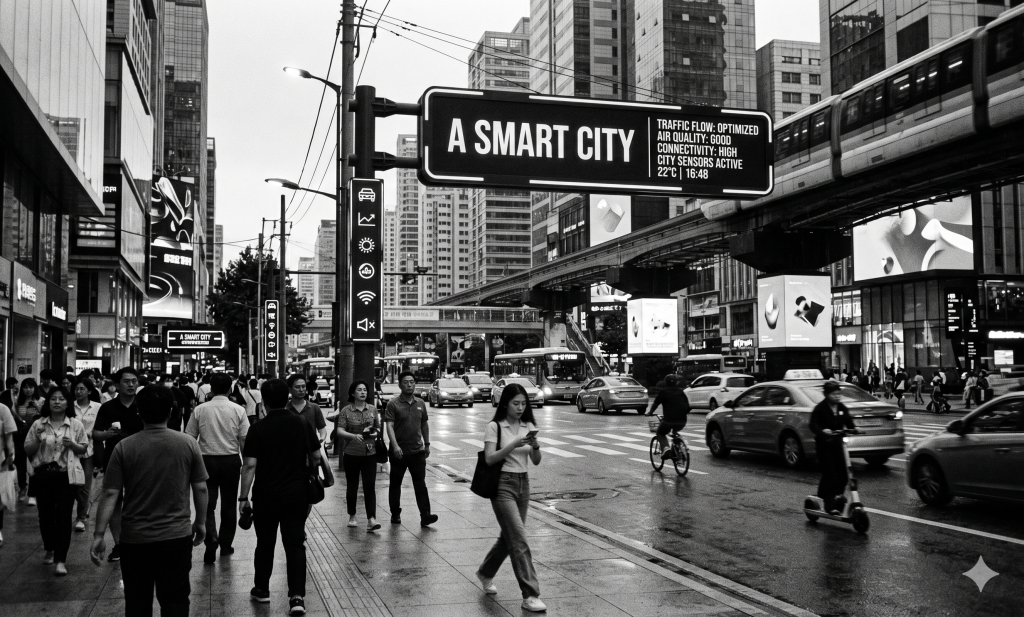
Building the Infrastructure for Tomorrow: What Makes a City ‘Smart’?
“Smart city” has evolved far beyond a simple tech buzzword. With the massive surge in Internet of Things (IoT) sensors and connected devices, urban environments around the world are becoming more integrated and responsive than ever before.
However, a smart city is defined differently depending on a region’s infrastructure, resources, and community needs. A smart city initiative in Europe, for instance, focuses on distinct priorities compared to one in India or Australia. Despite regional differences, the core objective remains universal: leveraging data and digital technology to elevate the everyday quality of life for residents.
According to research from the McKinsey Global Institute (MGI), deploying smart city applications can improve key quality-of-life indicators—such as public health, safety, and transit efficiency—by 10 to 30 per cent.
What Exactly Is a Smart City?
At its core, a smart city represents the urban re-development of a region using Information and Communication Technology (ICT). By deploying connected sensors and cloud infrastructure, local councils and governments can transform the economics and performance of vital urban services:
-
Mobility & Transit: Managing traffic gridlock, optimising public transport schedules, and integrating autonomous vehicle infrastructure.
-
Resource Optimisation: Improving energy distribution grids, reducing utility waste, and managing smart street lighting.
-
Public Safety: Enhancing emergency response times and deploying predictive maintenance for critical infrastructure.
According to digital security expert Gemalto, a smart city functions as an interconnected ecosystem. Cloud-based IoT networks gather real-time data from objects across the city, giving urban planners and residents the actionable insights needed to make faster, smarter decisions.
A prime example is the advancement of connected vehicles. Autonomous cars and connected transport communicate directly with parking meters, road sensors, and EV charging docks. Industry analyst firm Gartner projects that hundreds of millions of connected vehicles will be operating globally, with connected transport serving as a critical pillar of future urban mobility.
Scaling Tech Teams for Urban Transformation
Building connected urban infrastructure requires a sophisticated blend of software engineering, IoT systems integration, data analytics, and cloud security. As government initiatives and private developers roll out smart technologies, securing specialist tech talent is crucial to delivering robust, secure platforms.
Partnering with an experienced tech recruitment partner helps public and private sector organisations bridge critical skills gaps. You can access top-tier software engineers, data scientists, and infrastructure specialists through our localised services:
-
IT recruitment – Connecting enterprise teams and government bodies with experienced IT leadership and technical directors.
-
IT recruitment in Melbourne – Sourcing skilled IoT developers, cloud architects, and systems engineers for smart infrastructure projects.
-
IT recruitment in Sydney – Accessing elite data analysts, machine learning engineers, and enterprise solution architects.
-
IT recruitment in Adelaide – Finding specialist defence-grade cybersecurity professionals, embedded systems developers, and network engineers.
Why Modern Cities Urgent Need Smart Infrastructure
Rapid global urbanisation is putting unprecedented pressure on existing city systems. According to UN and industry data, urban migration is set to add 2.5 billion people to global cities over the coming decades, compounding issues in already crowded hubs like London, Tokyo, and New York.
For example, Britain’s Department for Transport highlighted extreme urban congestion, noting that commuter loads frequently exceed train capacity during peak morning hours. Smart urban planning addresses these challenges directly:
1. Environmental & Economic Sustainability
As populations expand, cities must balance resource consumption with environmental targets. Smart grids, automated waste management, and intelligent traffic routing drastically reduce carbon footprints while cutting operational expenses.
2. Enhanced Public Safety and Response
Data-informed decision-making saves lives. MGI’s report highlights that implementing smart technologies—such as real-time crime mapping and automated emergency traffic signals—can reduce fatalities by 8 to 10 per cent and lower crime rates by 30 to 40 per cent.
3. Cyber Security & Identity Protection
Connecting physical infrastructure to digital networks introduces significant cyber risks. As cities digitise, implementing robust authentication systems, secure identity management, and encrypted data channels becomes mandatory to defend against cyber threats and protect citizen privacy.